What Is the Best Age for Kids to Start Brazilian Jiu-Jitsu?
A practical guide for Dubai parents on when children are ready to begin BJJ, what early classes should look like and how to choose a suitable program.
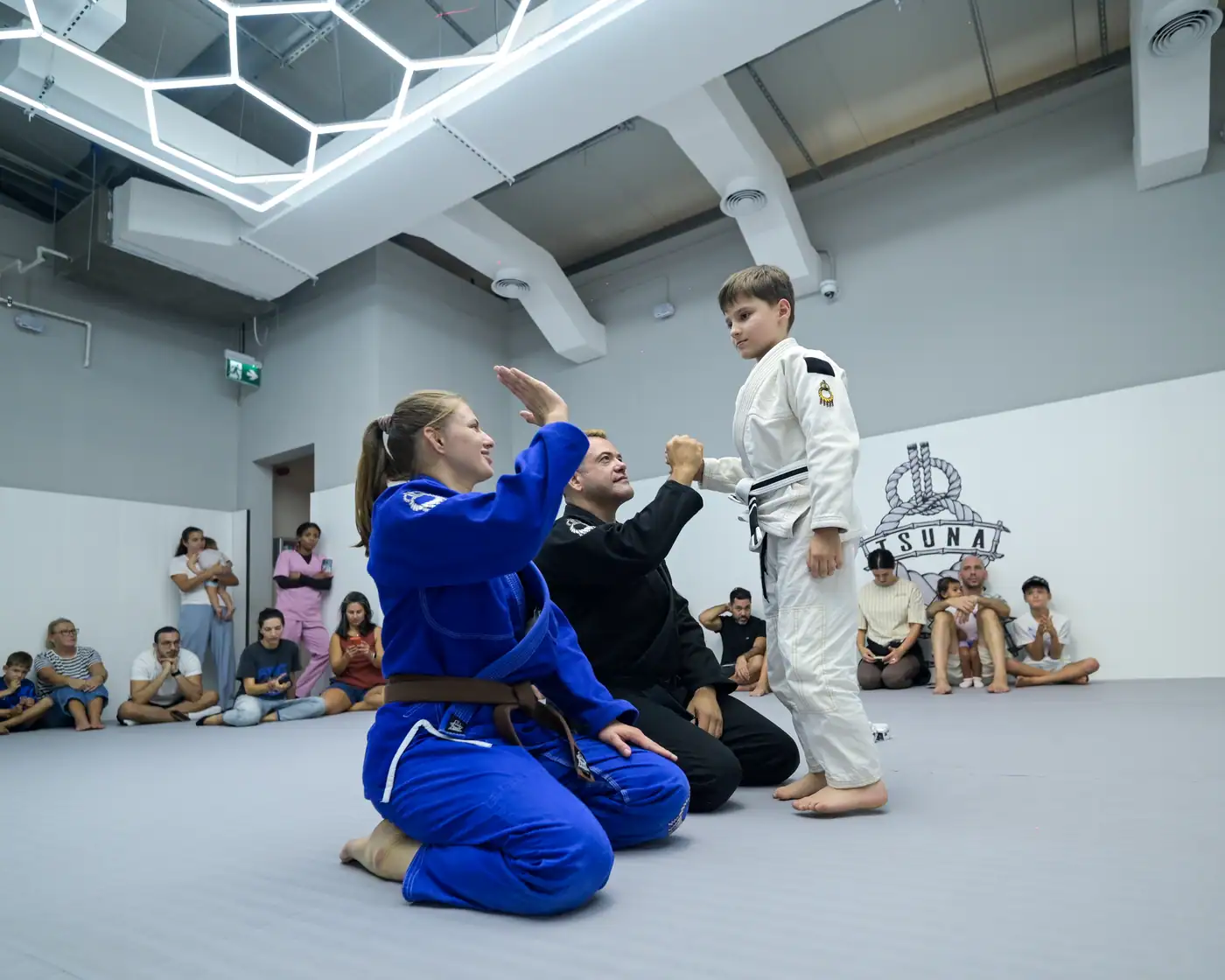
There is no single perfect age to start Brazilian Jiu-Jitsu. A three-year-old who enjoys group games and follows simple instructions may be ready for an introductory class, while another child might benefit from waiting a little longer. The better question is whether the class fits the child’s stage of development.
At Tsuna in Al Quoz, we separate younger students into age-appropriate groups. Here is what parents can look for before deciding whether to book a first lesson.
Ages 3–4: movement first, technique second
At this age, a good introductory class should feel like structured play. Balance, body awareness, taking turns, listening and moving safely with a partner matter more than memorising submissions or learning to spar.
Some children participate immediately; others need time to observe and become comfortable with a new coach and environment. Look for short instructions, positive coaching and exercises that give everyone a manageable challenge.
- Can your child follow one or two simple directions?
- Are they reasonably comfortable being around a small group?
- Can they communicate when something feels uncomfortable?
Ages 5–7: building a foundation
Children in this range can often begin learning positions, controlled movement and basic grappling concepts through drills and games. They are also practising the social side of sport: waiting, cooperating and handling a difficult moment without giving up.
Progress is not only about techniques learned. A child becoming more comfortable joining class, listening to corrections or helping a partner is making meaningful progress.
Ages 8–12: more technical learning
As attention spans and coordination develop, training can include more detailed positional work, strategy and structured practice with partners. Some children enjoy competition; others prefer learning a skill and being part of the group.
Ask how the academy manages partners, supervises contact and adapts drills for students who are new or nervous. An effective class should challenge children without treating every session like a tournament.
What should parents check before signing up?
Visit the facility if possible. Notice how coaches speak to children, whether the mat is supervised and how beginners are introduced to contact. Ask about hygiene, class sizes, age groups, the timetable and whether a trial class is available.
Do not judge a program solely by belts or medals. Consistent attendance, enjoyment and safe instruction are better foundations for long-term participation.
- Choose an age-appropriate group rather than simply the most convenient time.
- Ask whether your child can try a class before committing.
- Give a first-timer time to settle; one quiet lesson does not predict their future interest.
Kids' BJJ classes at Tsuna in Al Quoz
Tsuna currently offers Minis (ages 3–4), Kids (ages 5–7) and Juniors (ages 8–12), with a separate approach to instruction for each group. Families can review the timetable and ask the team which session is best suited to their child.
If you are searching for children's Jiu-Jitsu in Dubai, a free introductory class is a practical way to see whether the environment and coaching style feel right for your family.
Common questions
Is three too young to start Jiu-Jitsu?
Not always. A play-based introductory class can suit some three-year-olds, provided they can follow basic instructions and the program is designed for their age.
Does my child need to be fit or athletic?
No special fitness background is needed for a beginner trial. Tell the coach about any relevant health or participation concerns in advance.
Should beginners compete?
Competition is optional for most children. They can develop confidence and technical skills without competing.